China Top Continuous Hinge Manufacturers for Global Buyers reflects a practical sourcing question, not merely a factory list. Continuous Hinge systems support doors in schools, hospitals, transport facilities, workshops, and high-traffic commercial buildings. Their value appears in small details: aligned knuckles, smooth pin movement, clean screw holes, and stable closing after repeated use.
Market comparisons require caution. UN Comtrade records related architectural hardware under broad HS 8302 categories, so hinge-specific trade values are difficult to isolate. This limitation matters. It prevents confident market-size claims based on customs data alone. Meanwhile, the RICS Global Construction Monitor continues to highlight cost pressure, labor shortages, and uneven construction demand across regions. Buyers therefore need more than a low unit price. They need consistent machining, documented materials, responsive engineering, and reliable export packaging.
This guide evaluates Chinese manufacturers through those practical criteria. It considers stainless steel or aluminum options, load capacity, hinge length, cycle testing, surface treatment, tolerances, and customization capability. ANSI/BHMA A156.26 offers a useful reference for continuous hinge performance and testing expectations. ISO 9001 certification can support process confidence, but it does not guarantee every shipment is perfect. Factory audits, sample approval, inspection records, and traceable batch information remain essential. Not every “top” supplier will suit every project. A fire-rated door, refrigerated enclosure, and outdoor cabinet demand different evidence. The strongest manufacturers explain those differences clearly, provide test documentation, and admit where their products need further verification before global deployment.
Continuous hinges, often called piano hinges, run almost the full height of a door or panel. Unlike three separate hinges, they use a long pin and linked knuckles to support the entire edge. This design spreads the door’s weight along the frame instead of concentrating force at a few mounting points. The result is smoother movement and less twisting during repeated use.
When the door opens, the knuckles rotate around the pin as one connected joint. The hinge leaves remain fixed to the door and frame with screws or other approved fasteners. Correct alignment matters. A small gap at the top can prevent binding, while uneven spacing may create rubbing near the latch. Stainless steel suits damp environments, while aluminum reduces weight where heavy-duty strength is not essential. Material selection should match the door size, traffic level, and surrounding conditions.
From practical installation work, measuring the frame before drilling prevents many problems. A hinge that is too short leaves unsupported weight near the corners. A hinge that is poorly aligned can make a light door feel unusually heavy. This is easy to overlook. Periodic checks should include loose fasteners, pin wear, corrosion, and changes in closing force. No installation is perfect, and real doors may shift after temperature changes or frequent use. That is why testing the door through repeated opening cycles remains valuable for global buyers evaluating long-term reliability.
Continuous hinges support the full door height, unlike small hinges that concentrate stress at several points. They reduce sagging, protect wiring, and improve alignment in busy entrances. A 2024 MarketsandMarkets report estimates steady growth in the global door systems market, driven by commercial construction and renovation. That trend increases demand for reliable hinge hardware.
A quality continuous hinge usually combines stainless steel or reinforced aluminum leaves with a steel pin. Some models include concealed channels for access-control cables. These details matter in hospitals, schools, warehouses, buses, and security doors. The hinge should match door weight, width, frame strength, and opening frequency. It is not simply a longer hinge.
ANSI/BHMA A156.26 provides a useful reference for continuous hinge performance and testing. For fire-rated assemblies, buyers should verify the complete door system, not only the hinge. Field experience shows that poor installation causes many failures. Uneven gaps, loose fasteners, and damaged wiring can create rubbing within weeks. Small errors become expensive.
A 2023 report from Grand View Research identifies durability and low-maintenance hardware as important commercial door purchasing factors. Buyers should request cycle-test evidence, corrosion information, load limits, and installation drawings. Specifications can look impressive. Real conditions are harsher. Salt air, dust, and heavy carts often expose weaknesses earlier than laboratory tests.
China’s manufacturing scale deserves careful verification, not automatic trust. UNIDO’s International Yearbook of Industrial Statistics 2024 reports that China produced about 31.6% of global manufacturing value added in 2022. That capacity is useful, but continuous hinges still vary widely in steel grade, pin fit, and forming accuracy.
I evaluate manufacturers through documented process evidence. Ask for material certificates, batch traceability, and dimensional inspection records. Check hinge length, leaf thickness, knuckle alignment, pin diameter, and mounting-hole tolerance. A reliable supplier should provide samples from normal production, not specially selected pieces. Test opening torque, repeated cycling, load resistance, and corrosion performance. Salt-spray results need test conditions and duration.
The ISO Survey 2023 identifies China as the largest holder of ISO 9001 certificates worldwide. Certification helps, but it does not prove hinge quality. Review corrective-action records and inspect calibration labels during a factory audit. Can the supplier explain a failed batch clearly?
Logistics also matter. The World Bank’s 2023 Logistics Performance Index gave China a score of 3.7, ranking it 19th globally. Confirm packaging strength, export documentation, production capacity, and realistic lead times. One overlooked detail is coil straightness; slight curvature can create installation gaps across a long door. I would also compare three production batches, because one sample can look perfect. That weakness is easy to miss.
The chart presents a practical evaluation-weight model for global buyers. Material traceability, load and cycle testing, corrosion resistance, and dimensional consistency should receive the highest priority because they directly affect hinge durability, safety, and installation performance. Customization, delivery capability, and technical documentation help confirm whether a manufacturer can support a reliable long-term supply program.
China’s top continuous hinge manufacturers serve global buyers through flexible, process-driven production. Their capabilities often cover stainless steel, aluminum, brass, and coated steel. Material selection depends on load, corrosion exposure, door thickness, and installation conditions.
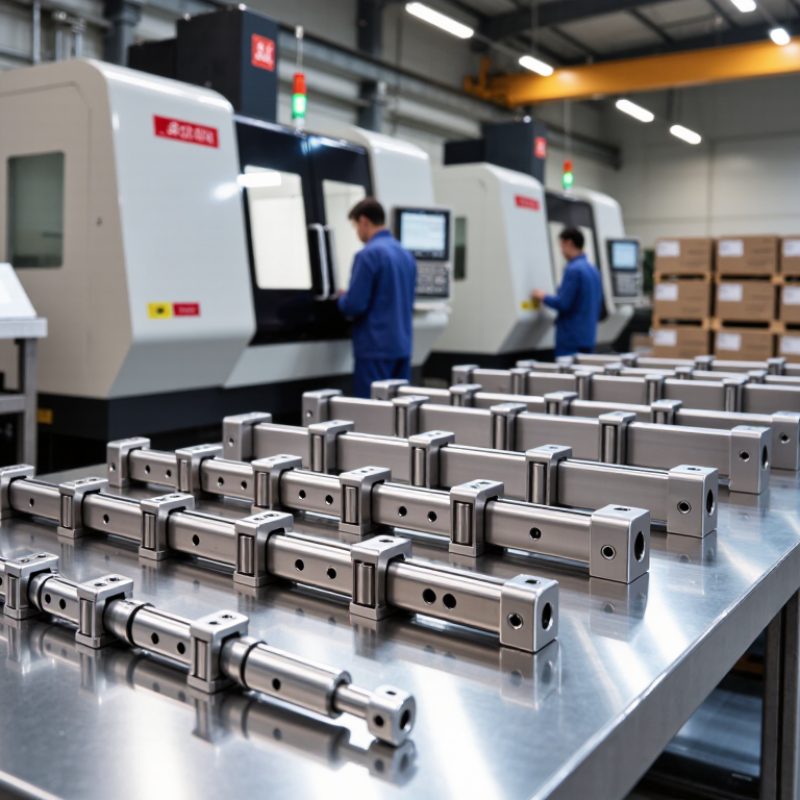
Experienced factories usually combine precision stamping, roll forming, CNC machining, and controlled assembly. These processes help create long hinge lengths with consistent knuckle alignment. Skilled technicians check hole spacing, pin movement, surface finish, and edge safety during production. Practical inspection matters more than attractive specifications.
It should fit correctly.
Reliable manufacturers also support custom drawings, prototypes, sample approval, and batch traceability. Quality teams may use calipers, gauges, hardness testers, and torque checks. Export packaging should protect straightness during long-distance transport. Moisture-resistant wrapping and reinforced cartons can reduce avoidable damage.
However, no production line is perfect. Early samples may expose slight warping or difficult installation points. A serious supplier records these issues and adjusts tooling, material thickness, or inspection frequency. Global buyers should review inspection reports, production photos, tolerances, and communication speed before placing large orders. Clear documentation builds confidence across different languages and supply chains. Some factories still rely too heavily on manual checks, which can create inconsistent results. That weakness deserves honest discussion and measurable improvement. Regular audits, controlled samples, and corrective-action records make manufacturing performance easier to verify.
| Capability Dimension | Common Manufacturing Capability | Relevant Materials, Processes or Standards | Global Buyer Considerations |
|---|---|---|---|
| Product Type | Continuous hinges, also known as piano hinges, supplied in standard lengths or cut-to-length configurations. | Full-length hinge leaves with knuckles formed along the hinge length. | Confirm whether the hinge is supplied loose, pre-cut, drilled, countersunk or prepared for installation. |
| Common Materials | Stainless steel, carbon steel, aluminium and brass are commonly used for continuous hinge production. | Typical stainless-steel grades include AISI 304 and AISI 316; aluminium alloys are selected according to weight and corrosion requirements. | AISI 316 is generally preferred for marine or chloride-rich environments, while AISI 304 is widely used for general indoor and outdoor applications. |
| Material Thickness | Light-duty, medium-duty and heavy-duty hinge leaves can be produced by selecting different strip thicknesses. | Actual thickness depends on hinge width, pin diameter, material grade and required load performance. | Request verified drawings and material certificates rather than relying only on nominal product descriptions. |
| Manufacturing Processes | Typical processes include strip forming, roll forming, knuckle forming, pin insertion, cutting, punching, drilling and finishing. | Automated forming and progressive tooling can support repeatable dimensions for large production runs. | Ask about tooling ownership, production repeatability and inspection procedures for high-volume programs. |
| Custom Dimensions | Manufacturers commonly support custom leaf width, hinge length, knuckle length, pin diameter, hole spacing and hole geometry. | CAD drawings, 2D production drawings and approved samples are normally used for dimensional control. | Provide installation clearances, door or panel weight, opening angle and mounting-hole requirements during quotation. |
| Mounting Options | Available configurations may include plain, punched, countersunk, slotted-hole and welded-mounting designs. | Hole patterns can be adapted for screws, rivets or spot-welding applications. | Verify fastener head clearance, hole tolerance and whether mounting holes are centered or offset. |
| Surface Finishes | Common finishes include mill finish, brushed stainless steel, polished stainless steel, electroplated finish, powder coating and passivation. | Stainless-steel passivation is commonly used to improve surface cleanliness and corrosion resistance after fabrication. | Specify surface roughness, appearance grade, coating thickness and salt-spray requirements where applicable. |
| Corrosion Resistance | Resistance is determined by the base material, surface treatment, installation environment and maintenance conditions. | Stainless steel is generally selected for improved corrosion resistance compared with untreated carbon steel. | For coastal, food-processing or chemical environments, confirm grade selection and any required corrosion testing. |
| Load and Duty Selection | Continuous hinges can be configured for light equipment panels, cabinets, enclosures, access doors and heavier industrial doors. | Load performance depends on hinge length, material thickness, pin design, mounting method, door geometry and operating cycles. | There is no universal load rating; obtain application-specific test data or engineering calculations before final approval. |
| Pin Configurations | Fixed-pin and removable-pin constructions are commonly available. | Pin materials may include stainless steel, carbon steel or other specified metals compatible with the hinge leaves. | Removable pins can simplify assembly and maintenance, while fixed pins may improve tamper resistance. |
| Dimensional Inspection | Production inspection may cover hinge length, leaf width, thickness, hole position, knuckle alignment and pin fit. | Calipers, micrometers, gauges, coordinate measuring equipment and approved inspection plans may be used. | Define critical-to-function dimensions and acceptable tolerances on the approved technical drawing. |
| Quality Management | Export-oriented factories may operate documented quality-management systems and batch traceability procedures. | ISO 9001 is an internationally recognized quality-management-system standard; certification status should be independently verified. | Request a current certificate, scope of certification, inspection records and corrective-action process. |
| Packaging for Export | Continuous hinges may be packed in protective sleeves, cartons, pallets or export-grade wooden cases according to order requirements. | Packaging can include separators, moisture protection, labels and barcode identification. | Confirm packaging dimensions, palletization, container utilization and protection against scratching or deformation. |
| Sampling and Prototyping | Prototype samples can be produced for dimensional approval, installation trials and finish evaluation before mass production. | First-article inspection may be documented against the approved drawing and sample requirements. | Use a signed sample approval and change-control process to reduce production variation. |
| International Trade Support | Export suppliers commonly provide commercial invoices, packing lists, product specifications and shipping documentation. | HS classification, country-of-origin documentation and Incoterms should be confirmed for each shipment. | Buyers should verify import duties, local compliance obligations and documentation requirements in the destination market. |
| Best-Fit Applications | Common applications include electrical enclosures, control cabinets, access panels, toolboxes, commercial doors, vehicle bodies and industrial equipment. | Selection should be based on environment, operating frequency, panel geometry, security needs and expected service life. | Application suitability should be confirmed through technical review and, where necessary, functional testing. |
Buying continuous hinges from China requires more than comparing unit prices. Quality begins with the hinge body, pin, knuckle alignment, and surface finish. Ask manufacturers for material certificates, dimensional drawings, and load-test records. Stainless steel may suit outdoor equipment, while coated steel can reduce costs in controlled environments. Small details matter. Check burrs, uneven gaps, weak fastening holes, and rough movement before approving samples.
Customization should be practical, not decorative. Provide door weight, length, thickness, mounting method, hole spacing, and operating frequency. Experienced manufacturers can recommend pin diameters, leaf thicknesses, and corrosion-resistant finishes. Request a production sample made with the final material and tooling. A polished sample can still hide problems. Confirm tolerances, packaging protection, and inspection points in writing.
Export planning needs equal attention. Verify carton dimensions, labeling, pallet requirements, and the agreed Incoterm before production. Confirm the correct customs classification with a qualified broker in the destination market. Ask for commercial invoices, packing lists, test reports, and origin documents where required. Factory audits, video inspections, and independent pre-shipment checks improve reliability. Keep records. Even careful buyers sometimes overlook replacement parts, installation hardware, or damage claims. A written quality agreement gives both sides clearer responsibility when something goes wrong.
Request material certificates, batch records, and dimensional inspection reports. Check hinge length, leaf thickness, pin diameter, and knuckle alignment. Test normal production samples, not specially selected pieces. Test real samples.
Inspect burrs, uneven gaps, rough movement, and weak mounting holes. Measure hole spacing and installation tolerances with suitable tools. Check whether the coil remains straight across its full length. Small bends can create visible door gaps.
Ask for opening-torque, repeated-cycle, load-resistance, and corrosion-test results. Corrosion reports should state the test method and exposure duration. Cycle testing should match the door’s expected operating frequency. Numbers without conditions are incomplete.
Stainless steel may suit outdoor equipment and damp environments. Coated steel may reduce costs in controlled indoor conditions. Confirm the actual grade, coating thickness, and surface-finish requirements. Appearance alone proves little.
Provide door weight, hinge length, door thickness, mounting method, and hole spacing. Include expected opening frequency and environmental exposure. The manufacturer can then suggest pin diameter and leaf thickness. Avoid decorative customization.
Compare samples from at least three regular production batches. Inspect the same measurements and movement in every batch. One excellent sample may hide unstable processes. I might still miss something.
Review corrective-action records and calibration labels on inspection equipment. Ask the supplier to explain a failed batch clearly. Video inspections and independent checks can reveal process weaknesses. Trust needs evidence.
Confirm carton size, labels, pallet requirements, and the agreed delivery term. Request invoices, packing lists, test reports, and origin documents when required. Verify customs classification with a qualified broker in the destination market. Keep records.
A Continuous Hinge is a long, full-length hinge designed to distribute weight and stress evenly across the entire door, panel, or access cover. Its structure supports smooth, stable movement while reducing sagging, misalignment, and concentrated wear. Common applications include commercial doors, cabinets, transportation equipment, machinery enclosures, and architectural systems where durability and reliable operation are essential. Buyers should consider material, load capacity, corrosion resistance, installation method, and operating environment when selecting a suitable product.
When evaluating China’s continuous hinge manufacturers, global buyers should examine production capabilities, quality-control procedures, engineering support, and experience with international orders. Reliable suppliers should be able to provide consistent dimensions, precise drilling or cutting, custom lengths, finishes, materials, and packaging solutions. Clear communication about samples, tolerances, testing, lead times, documentation, and shipping arrangements is also important. By comparing customization options, manufacturing consistency, export readiness, and after-sales service, buyers can identify a dependable partner for long-term procurement and diverse project requirements.

LvXing Hinges