Choosing the top Aluminium Piano Hinge manufacturer in China requires more than comparing catalogue prices. The real test begins with the hinge in your hand. Does the leaf sit flat? Does the stainless-steel pin move smoothly? Are the drilled holes consistent across a full production batch?
Liu Wei, an independent aluminium hardware engineering consultant, says, “A reliable hinge is measured by consistency, not by appearance alone.” This practical view matters. Aluminium alloy grade, temper, knuckle alignment, pin hardness, and anodizing quality can affect service life. Experienced buyers should also examine load-testing records, dimensional inspection reports, packaging methods, and production traceability. A polished sample proves little if the next 10,000 pieces vary.
The strongest Chinese manufacturers usually combine extrusion expertise with accurate forming, CNC processing, and strict quality control. They can explain their tolerances clearly. They should also provide samples that reflect ordinary production, not specially selected pieces. Ask about tooling ownership, minimum order quantities, lead times, corrosion testing, and replacement procedures. These details reveal operational maturity.
There is no effortless answer.
Some suppliers market aggressively but offer weak technical evidence. Others produce excellent hinges yet communicate poorly in English. That weakness should not be ignored. A dependable partner needs both manufacturing capability and responsive engineering support. This guide compares leading candidates through product quality, factory experience, customization ability, testing discipline, and customer reliability. The final ranking may not satisfy every buyer. Requirements differ, and that is worth remembering.
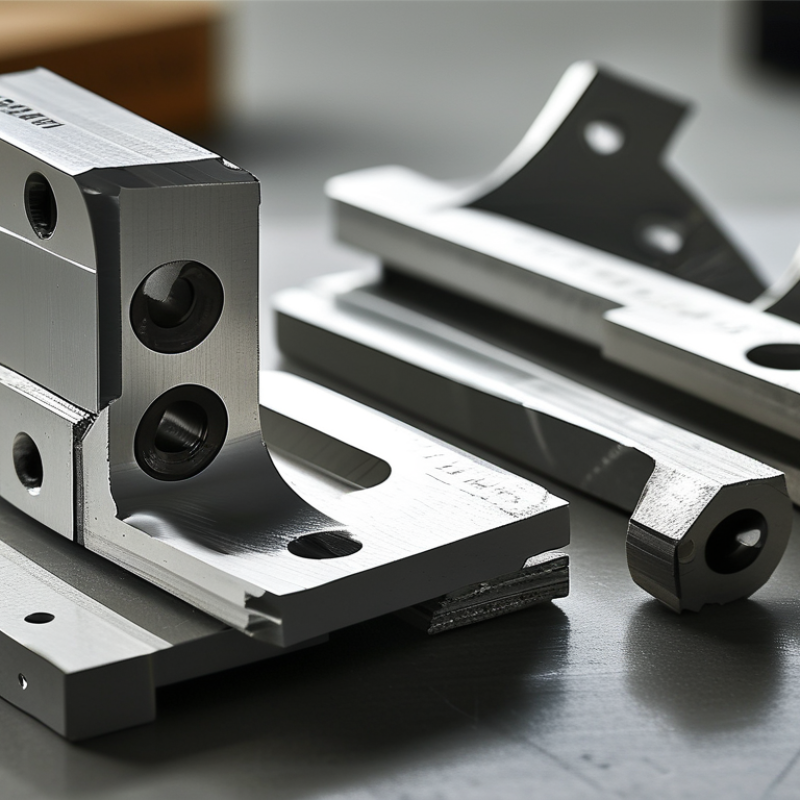
An aluminium piano hinge is a continuous hinge made from aluminium alloy. Unlike short door hinges, it runs along nearly the entire edge of a panel. Its long knuckles share the load more evenly. A metal pin passes through these knuckles, allowing smooth, stable movement.
This hinge suits lightweight doors, cabinets, tool cases, access panels, and equipment enclosures. Aluminium provides useful corrosion resistance and a low overall weight. It also machines easily during cutting and drilling. However, it is not automatically suitable for heavy industrial doors. Load, panel thickness, hinge length, and opening frequency must match the design.
In practical fabrication, accurate alignment matters greatly. A small installation error can create binding or uneven gaps. I have seen hinges fail early because installers used weak screws, not because the hinge was defective. That detail deserves attention. The hinge may have holes, but the supporting material still needs enough strength.
Buyers should check alloy grade, pin diameter, surface treatment, tolerances, and available lengths. Anodizing can improve surface durability, although it cannot repair poor fitting. Stainless steel pins may perform better in demanding environments. Still, every project needs testing. A sample hinge may move perfectly on a bench, yet behave differently after dust, vibration, or repeated use.
Who Is the Top Aluminium Piano Hinge Manufacturer in China?
Choosing the top aluminium piano hinge manufacturer requires more than comparing prices. Examine the alloy grade, hinge thickness, barrel diameter, and pin design. These details affect strength, movement, and service life. Ask for material certificates and recent inspection records. A reliable manufacturer should explain its testing process clearly, not hide behind attractive product photos. Request samples with your intended door or panel. Check alignment, surface finish, burrs, and operating noise by hand.
Production experience matters. Visit the factory, if possible, or request a live video inspection. Look for clean work areas, organized tooling, and traceable batch records. Ask how workers control cutting accuracy and anodizing consistency. A serious supplier can provide load testing, cycle testing, and dimensional reports. However, documents alone are not enough. I have seen good reports paired with average samples. That mismatch deserves careful questions.
Tips: Compare at least three samples under the same conditions. Measure hole spacing with a caliper. Open and close each hinge repeatedly. Check whether the pin loosens or the finish scratches easily. Discuss packaging, replacement parts, lead times, and communication before ordering. Clear technical drawings reduce mistakes. Small details matter. Also, leave room for doubt. A manufacturer that admits limitations may be more trustworthy than one promising perfection.
Which manufacturer leads China’s aluminium piano hinge market? In practice, the strongest supplier is not always the largest factory. It is the manufacturer that consistently controls alloy quality, hinge geometry, surface finishing, and delivery performance. Experienced buyers usually inspect 6063 or 6061 aluminium grades, rather than trusting a general product label. They also request samples with exact hole spacing, pin diameter, and length tolerances.
A leading manufacturer should operate clear quality checks at each stage. Inspectors can measure knuckle alignment with calipers, examine burrs under strong light, and test repeated opening cycles. Anodized surfaces should show even color and stable adhesion. Samples reveal weaknesses. A hinge may look smooth but bind after several hundred movements. That small failure can damage a cabinet door or equipment panel.
Reliable suppliers also provide traceable batch records, practical engineering support, and realistic production schedules. They should explain extrusion limits, cutting tolerances, fastening options, and packaging protection for long profiles. Certifications can support credibility, but paperwork alone does not prove field performance. A factory visit or independent inspection adds stronger evidence. No manufacturer is perfect, including a highly capable one. Some suppliers still improve their pin fit or reduce minor surface marks. That gap matters. The market leader is therefore the supplier that combines repeatable manufacturing, responsive communication, and measurable quality across regular orders, not merely the one offering the lowest quotation.
| Evaluation Dimension | Objective Market Requirement | Relevant Technical or Commercial Data | Recommended Evidence | Priority | Leadership Indicator |
|---|---|---|---|---|---|
| Aluminium Alloy | The alloy should match the required balance of corrosion resistance, formability, strength, and appearance. | Common engineering choices include 5xxx-series and 6xxx-series aluminium alloys. The exact grade and temper should be stated on the technical specification. | Material certificate showing alloy grade, temper, and applicable standard. | Required | Full traceability |
| Hinge Geometry | Knuckle diameter, leaf width, pin diameter, open angle, and mounting-hole pattern must remain consistent throughout production. | Dimensional drawings should define all critical dimensions, tolerances, hole spacing, corner geometry, and hinge length. | Approved engineering drawing and first-article inspection report. | Required | Low variation |
| Material Thickness | Leaf thickness must be suitable for the intended load, fastening method, and installation substrate. | Thickness should be controlled against a documented tolerance rather than described only as “heavy duty” or “standard.” | Inspection records using calibrated measuring equipment. | Required | Documented tolerance |
| Surface Finish | The finish should provide the required appearance and protection for the operating environment. | Available processes may include anodizing, powder coating, polishing, brushing, or mill finish. Colour and gloss requirements should be specified separately. | Approved sample, finish specification, and coating or anodizing inspection report. | Preferred | Consistent appearance |
| Corrosion Resistance | Products used outdoors, in humid areas, or near salt exposure require an appropriate material and finish combination. | Corrosion performance depends on alloy, surface treatment, environment, handling, and fastener compatibility; no single finish is suitable for every application. | Test method, test duration, and laboratory report relevant to the intended environment. | Required | Application-specific validation |
| Load and Cycle Performance | The hinge should operate without excessive play, binding, cracking, or permanent deformation during its intended service life. | Performance depends on hinge length, load distribution, mounting method, pin design, and opening frequency. A universal load rating should not be assumed. | Defined test fixture, load conditions, cycle count, and acceptance criteria. | Required | Repeatable test data |
| Pin and Knuckle Fit | The pin should provide smooth movement while maintaining adequate retention and alignment. | Critical controls include pin straightness, pin-to-knuckle clearance, knuckle concentricity, and end retention. | Dimensional inspection report and functional assembly test. | Required | Smooth operation |
| Quality Management | A systematic quality process is essential for repeat orders and large-volume production. | Documented incoming inspection, in-process controls, final inspection, nonconformance handling, and corrective-action procedures are key indicators. | Current quality-management certificate and sample quality records. | Preferred | Controlled process |
| Regulatory Compliance | Export markets may impose restrictions on hazardous substances, chemical content, packaging, and product documentation. | Compliance requirements depend on the destination market and product configuration. Declarations should be supported by material or laboratory evidence. | Declaration of conformity, restricted-substance statement, and relevant test reports. | Required | Destination-market readiness |
| Production Capability | The supplier must be able to maintain the required profile, length, finish, packaging, and order quantity. | Capability should be evaluated through process equipment, tooling control, production capacity, inspection resources, and contingency planning. | Process-flow chart, capacity statement, tooling records, and production samples. | Required | Scalable supply |
| Customization | Custom lengths, hole patterns, profiles, finishes, pins, and packaging may be needed for specific applications. | Customization normally requires technical drawings, sample approval, tooling review, minimum order discussion, and change-control procedures. | Signed specification, approved sample, and controlled revision history. | Preferred | Engineering flexibility |
| Delivery Reliability | Stable lead times and complete shipments are important for industrial and construction projects. | Actual performance should be assessed through historical on-time delivery, production scheduling, packaging controls, and communication procedures. | Recent delivery records, production schedule, and packaging inspection checklist. | Required | Predictable fulfillment |
| Commercial Transparency | A qualified supplier should provide clear specifications instead of relying only on price or general product descriptions. | Quotations should identify alloy, temper, dimensions, finish, tolerances, packaging, inspection scope, and trade terms. | Detailed quotation, technical datasheet, and written change-control terms. | Required | Comparable bids |
| Market Leadership Assessment | No manufacturer should be identified as the market leader solely from advertising, search position, or an isolated low quotation. | A defensible ranking requires comparable data covering quality, capacity, compliance, delivery, customization, total cost, and independently verified customer performance. | Audited evidence, verified references, product testing, and comparable procurement results. | Verify | Evidence-based ranking |
Choosing the top aluminium piano hinge manufacturer in China requires more than comparing quotations. Buyers should examine alloy grades, hinge thickness, knuckle diameter, pin material, and hole spacing. These details affect load capacity, movement, and service life. Ask for dimensional drawings and tolerances before approving production. A hinge that feels smooth on a sample may still wear quickly under repeated movement.
Product range matters too. Compare continuous hinges for cabinets, doors, equipment enclosures, and transport cases. Check whether the supplier offers cut-to-length pieces, custom hole patterns, anodized finishes, and corrosion-resistant options. Request samples from the actual production line. Small differences matter. I have seen polished samples hide rough edges and uneven drilling.
Services often reveal manufacturing reliability. Evaluate engineering support, tooling capability, inspection reports, material certificates, and batch traceability. Confirm testing methods, including cycle testing and salt-spray evaluation where relevant. Packaging deserves attention; thin aluminium edges can bend during ocean transport. Discuss minimum order quantities, production lead times, replacement procedures, and communication during quality disputes. A low price can become expensive after rework. Even experienced buyers sometimes overlook packaging and pin retention. That mistake is worth reconsidering. A dependable supplier should answer technical questions clearly and provide evidence, not vague promises.
Who Is the Top Aluminium Piano Hinge Manufacturer in China?
Choosing the right aluminium piano hinge manufacturer requires more than comparing prices. Start by checking alloy grades, hinge dimensions, load capacity, and surface treatment options. A reliable factory should provide clear drawings, material certificates, and inspection records. Ask how the hinge performs after repeated opening cycles. Small differences matter. A hinge that binds by one millimetre can damage an enclosure door or weaken its alignment.
Request production samples before approving a large order. Examine the knuckle movement, pin finish, hole spacing, and edge quality under good lighting. The best manufacturers explain their tolerances instead of promising perfection. Their engineers should review your application, including door weight, operating frequency, mounting method, and exposure to moisture. Generic advice is not enough here.
Factory capability also matters. Visit the production site when possible, or request detailed process videos and recent quality reports. Check whether cutting, forming, drilling, anodising, and assembly are controlled internally. Outsourced steps can create inconsistent finishes. It happens. Confirm packaging methods too, because long hinges can bend during transport without visible carton damage. A written corrective-action process shows accountability when defects appear. However, documents alone cannot prove consistency; compare several batches and keep your own measurements. A capable supplier welcomes those questions, even when your specification is still incomplete.
Typical minimum yield strength of commonly used aluminium alloys for hinge projects
Material strength is one practical benchmark when evaluating an aluminium piano hinge manufacturer. Higher yield strength can support demanding load requirements, but the final selection should also verify alloy temper, hinge dimensions, corrosion resistance, tolerances, surface finish, testing records, and material certificates. Values shown are typical minimum yield-strength references in MPa and may vary by thickness and applicable standard.
It is a continuous hinge made from aluminium alloy. It runs along nearly an entire panel edge. A metal pin joins its long knuckles. This spreads the load and supports smooth movement.
They suit lightweight doors, cabinets, tool cases, access panels, and equipment enclosures. They are useful where low weight and corrosion resistance matter. They are not automatically suitable for heavy industrial doors.
Check the alloy grade, thickness, barrel diameter, pin size, and available lengths. Review hole spacing and surface treatment. Panel weight and opening frequency also matter. The wrong combination can shorten service life.
Aluminium offers useful corrosion resistance. Anodizing can improve surface durability and appearance. It cannot fix poor fitting or weak supporting material. Demanding environments may require a more suitable pin material.
It is extremely important. A small alignment error can cause binding or uneven gaps. Use accurate measurements and strong screws. The hinge may be fine. The panel material may not be.
Request samples, material certificates, inspection records, and technical drawings. Check burrs, hole spacing, alignment, finish, and operating noise. A live factory inspection can reveal organized tooling and traceable batches. Photos are not enough.
Ask for dimensional checks, load testing, and repeated opening cycles. Measure hole spacing with a caliper. Open and close each sample many times. A smooth bench sample may bind after dust or vibration.
The best supplier is not always the largest or cheapest. Choose one with consistent alloy quality, accurate geometry, stable finishing, and realistic delivery. Responsive communication also matters. No supplier is perfect. A manufacturer admitting limitations may deserve more trust.
An Aluminium Piano Hinge is a continuous hinge made from aluminium, offering smooth movement, reliable support, corrosion resistance, and a lightweight structure. It is commonly selected for cases, cabinets, access panels, equipment enclosures, and other applications that require even load distribution along the full length of a door or lid. This article explains how buyers can assess Chinese manufacturers by reviewing material quality, production capabilities, dimensional accuracy, surface treatment, customization options, quality-control procedures, certifications, delivery reliability, and communication.
It also discusses how to compare products and services, including aluminium grades, hinge thickness, pin design, hole patterns, finishes, load capacity, packaging, sampling, and after-sales support. Rather than choosing solely by price, buyers should evaluate the manufacturer’s experience, engineering assistance, production consistency, lead times, minimum order requirements, and ability to meet project specifications. By comparing these factors carefully, purchasers can select a dependable Aluminium Piano Hinge manufacturer that provides suitable performance, stable quality, and efficient long-term cooperation.
LvXing Hinges