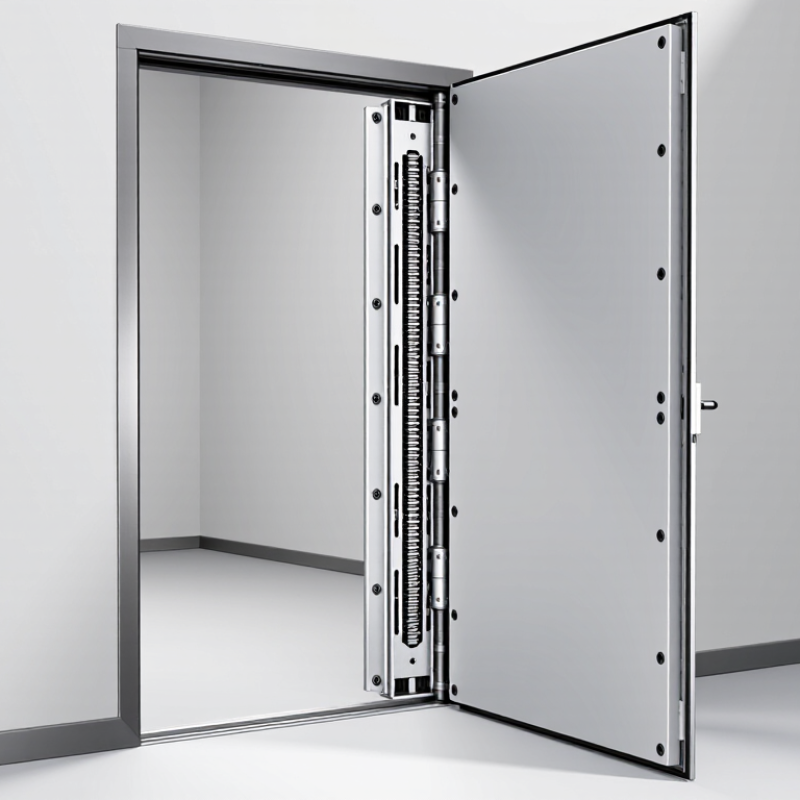
A Geared Full Surface Continuous Hinge is a long, aluminum hinge designed to support and guide an entire door edge. Unlike two or three separate hinges, it runs almost from the top of the door to the floor. Small gears inside the hinge transfer movement along its full length. This spreads the door’s weight more evenly and reduces stress on the frame, screws, and hinge leaves. The result is smoother movement, better alignment, and fewer pressure points around the door opening.
Architectural hardware consultant Lori Greene describes the practical principle this way: “A hinge is part of the door’s working system, not a decorative afterthought.” Her observation fits this product closely. A Geared Full Surface Continuous Hinge remains visible on the door face, so installation accuracy matters. The hinge must sit straight. Fasteners must match the door and frame materials. Clearances also need checking, especially around weather seals, thresholds, and fire-rated assemblies.
This guide will explain the hinge’s construction, operation, typical applications, and selection factors. It will also examine surface mounting, load distribution, durability, and maintenance needs. A small detail can cause a large problem. For example, a slightly bowed door may create uneven gear engagement and unwanted friction. That issue is easy to overlook. I have also found that “heavy-duty” labels can confuse buyers, because capacity depends on door size, traffic, materials, and installation quality. The hinge is not a cure for every alignment problem. Careful measurement still matters.
What Is a Geared Full Surface Continuous Hinge?
A geared full surface continuous hinge is a long hinge designed to support a door across its entire height. Unlike a few separate hinges, it distributes weight along the frame and door edge. Its geared knuckles interlock through a continuous length. When the door moves, the gears rotate together and reduce stress at individual points.
The “full surface” design means both hinge leaves remain visible and mount directly onto the door and frame surfaces. This structure can simplify installation because it requires less cutting into the surrounding material. Common components include two metal leaves, interlocking gear teeth, a center pivot, and end caps. In commercial field work, installers often check the door gap before tightening every screw. Small alignment errors can affect smooth movement. The hardware may appear simple, but accurate positioning matters.
Tips: Measure the door height, frame condition, and clearance first. Use fasteners suited to the door and frame materials. Keep the hinge straight during installation. Test the swing before final tightening. I have seen doors bind because the frame looked straight, but was not. That detail is easy to miss. A periodic inspection can reveal loose screws, worn teeth, or unusual resistance before the problem grows.
| Data Dimension | Definition or Typical Data | Function and Structural Significance |
|---|---|---|
| Product Type | Geared full surface continuous hinge | A full-length hinge mounted on the surface of the door and frame. It uses intermeshing gears to transfer door movement continuously along the hinge height. |
| Hinge Coverage | Usually extends from near the top to near the bottom of the door | Distributes loads across the complete hinge edge instead of concentrating stress at two or three separate hinges. |
| Mounting Method | Surface-mounted on the door and frame; mortising is generally not required | The two hinge leaves remain visible after installation, allowing installation on many hollow-metal, aluminum, wood, and composite door assemblies. |
| Main Hinge Leaves | Two continuous vertical leaves or mounting plates | One leaf attaches to the door and the other attaches to the frame. Their full-length construction improves load distribution and alignment. |
| Gear System | Intermeshing teeth running continuously along the hinge edge | The gears synchronize rotation between the door-side and frame-side leaves and help reduce uneven movement and localized wear. |
| Gear Cover | Protective channel or cap covering the exposed gear teeth | Protects the mechanism from dust and impact, improves appearance, and reduces the risk of contact with moving teeth. |
| Pivot or Bearing Area | Continuous pivot zone supported by the hinge profile; some designs include polymer or metal bearing surfaces | Supports smooth rotation and helps control friction between the moving door-side and stationary frame-side components. |
| Common Materials | Extruded aluminum, stainless steel, or steel; polymer components may be used for covers or bearings | Material selection affects corrosion resistance, weight, strength, finish, and suitability for interior or exterior applications. |
| Typical Hinge Length | Commonly supplied in door-height lengths, approximately 1.8–2.4 m for standard doors; custom lengths may be available | The hinge is normally selected to match the door height while allowing the manufacturer’s recommended top and bottom clearances. |
| Typical Leaf Width | Approximately 25–50 mm per leaf, depending on the profile and load rating | The leaf width determines the surface area available for fasteners and the amount of visible hardware on the door and frame. |
| Typical Door Thickness Range | Often used with doors approximately 35–60 mm thick; the compatible range depends on the hinge profile | Door thickness influences hinge geometry, fastener selection, clearances, and the final opening angle. |
| Opening Angle | Commonly about 90°–180°, depending on frame geometry, stops, seals, and adjacent construction | The hinge itself does not determine the complete opening angle; surrounding door and frame conditions also limit movement. |
| Load Distribution | Distributed over a continuous vertical mounting area rather than concentrated at individual hinge points | This can help reduce door sag, frame deformation, fastener pull-out, and stress around isolated hinge cutouts when correctly installed. |
| Fasteners | Multiple screws or bolts distributed along both mounting leaves | Fastener type, spacing, edge distance, and substrate strength are essential to achieving the intended load capacity. |
| Typical Applications | Commercial entrances, institutional doors, high-use interior doors, security doors, and doors subject to repeated cycling | The continuous design is useful where durability, alignment retention, and frequent operation are more important than concealed appearance. |
| Key Advantages | Continuous support, improved load sharing, surface installation, and coordinated gear movement | Compared with separated butt hinges, the design can improve long-term alignment and reduce stress concentrations along the hinge edge. |
| Important Selection Factors | Door weight, door width and height, traffic frequency, material, environment, fastener substrate, clearances, and required opening angle | A hinge should be selected from verified load and cycle data rather than from door size alone. Installation instructions must also be followed. |
Note: Dimensions and ranges shown are typical industry values for general reference. Actual capacity, profile dimensions, opening angle, materials, and installation requirements vary by hinge design and door assembly.
It is a long hinge supporting a door along its entire height. Interlocking gear teeth rotate together during movement. This spreads weight across the door edge and frame.
Both hinge leaves remain visible on the door and frame surfaces. They mount directly onto those surfaces. Less cutting may simplify installation.
Aluminum keeps the hinge light and resists common corrosion. Stainless steel offers stronger wear resistance in humid or busy areas. Material choice still needs careful checking.
Measure the door height, thickness, frame condition, and available clearance. Confirm the gear profile and hinge length before drilling. Appearance alone can mislead.
Some models use pre-punched holes, adjustable end caps, or countersunk fasteners. Select fasteners that match the door and frame materials. Thin cladding is not enough.
Attach it to structural reinforcement within the door and frame. Do not rely only on thin surface panels. Weak support may cause loose screws or movement.
Keep the hinge straight while positioning it. Check the door gap before tightening every screw. Test the swing first. Then tighten the fasteners fully.
Look for loose screws, worn gear teeth, unusual resistance, and changing gaps. Cleaning chemicals and temperature changes may also affect performance. Small problems are easy to miss.
No. A lighter hinge may ease handling, but traffic, door weight, and moisture still matter. Recycled content does not prove suitability. I might overlook alloy and fastener compatibility.
A Geared Full Surface Continuous Hinge is a full-length door hinge designed to support the door evenly from top to bottom while remaining visible on the surface of the frame and door. Its interlocking gear leaves transfer movement along the entire hinge length, helping reduce stress on individual fasteners, prevent sagging, and promote smooth, consistent operation. Commonly made from durable metals, it may be available in different lengths, finishes, and configurations to suit various door sizes and environments. Mounting features can include predrilled holes, adjustable components, and fasteners selected for the door and frame materials.
Installation requires accurate measurement, proper positioning, and careful alignment of the hinge leaves so the gears engage correctly without binding. Typical applications include commercial entrances, institutional doors, service areas, and other high-use openings. Benefits include improved load distribution, enhanced durability, and reduced maintenance compared with conventional hinges. Periodic inspection, cleaning, tightening of fasteners, and light lubrication where appropriate can help maintain reliable performance and extend the hinge’s service life.

 LvXing Hinges