Choosing the right China Best Aluminium Door Hinges Suppliers for Bulk Buy requires more than comparing unit prices. Buyers must examine alloy quality, machining accuracy, surface treatment, load capacity, and production consistency. Aluminium Door Hinges should open smoothly, hold alignment, and resist corrosion in demanding environments. Small defects become expensive when multiplied across thousands of doors.
Li Wei, an architectural hardware consultant with over fifteen years of sourcing experience, says, “A reliable hinge supplier proves quality through repeatable samples, clear tolerances, and honest inspection records.” That principle matters during factory evaluation. Ask for material specifications, salt-spray testing details, batch photographs, and installation samples. Check whether the supplier can maintain the same screw-hole position across repeated production runs. It sounds basic. It is not always basic.
Experienced buyers also review communication speed and corrective action. A supplier that admits a failed test may deserve more trust than one offering perfect claims. Still, a quotation alone cannot prove expertise. Confirm packaging strength, labeling accuracy, replacement policies, and export experience before placing a bulk order. Request a pre-production sample, then compare it with the approved version after manufacturing.
The best supplier may not be the cheapest. A stronger hinge can reduce callbacks, door sagging, and site delays. Yet buyers should remain critical. Even a respected factory may struggle with an unfamiliar profile or sudden material change. Clear drawings, written tolerances, and independent inspection create useful protection. This guide examines leading Chinese suppliers through those practical criteria, helping importers make a more informed and defensible decision.
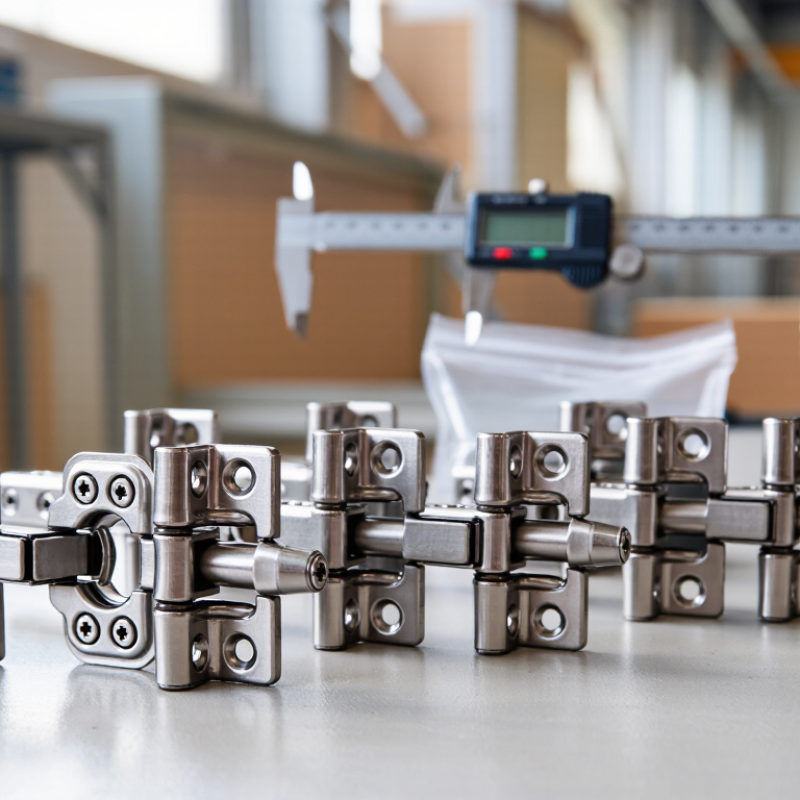
Aluminium door hinges are hardware components that connect a door leaf to its frame. They allow controlled opening and closing around a fixed pin. A typical hinge includes two leaves, a knuckle, and a removable or fixed pin. Some designs also use bearings for smoother movement. Aluminium offers low weight and good resistance to moisture, making it suitable for interior doors, office entrances, balconies, and light commercial areas.
The hinge must match the door’s weight, thickness, opening frequency, and installation environment. A narrow residential door may use standard butt hinges, while a heavier entrance may need reinforced or bearing-assisted hinges. During installation, the leaves should sit flush with the door and frame. Uneven gaps can create friction, noise, and early wear. Use suitable screws and check that the frame material can hold them securely. Small details matter.
For bulk purchasing, buyers should confirm hinge size, hole spacing, pin design, surface treatment, load rating, and packaging protection. Sample testing is useful before placing a large order. Open and close test doors repeatedly, then inspect the screws, pin, and knuckle for movement. Some buyers focus only on appearance. That is a common mistake. A clean finish cannot correct an undersized hinge. In practice, poor alignment causes more failures than the aluminium itself, so installation feedback should be reviewed before final production.
| Aluminium Door Hinge Type | Typical Construction | Common Door Applications | Typical Size Range | Typical Load Guidance | Main Advantages | Important Selection Points |
|---|---|---|---|---|---|---|
| Butt Hinge | Two leaves connected by a central knuckle and pin; commonly made from aluminium alloy with a steel or stainless-steel pin. | Residential, commercial and light industrial aluminium doors with a conventional frame-and-leaf arrangement. | 50–100 mm leaf length; approximately 2–4 mm leaf thickness for many standard designs. | Often used in sets of two or three; the allowable door weight depends on hinge size, spacing, frame strength and installation quality. | Simple, economical, widely available and suitable for concealed installation between the door and frame. | Check hinge thickness, screw-hole position, door clearance, pin material and the required number of hinges. |
| Surface-Mounted Hinge | Leaves remain visible on the surface of the door and frame; may include adjustable fixing slots. | Aluminium entrance doors, utility doors, cabinets and retrofit projects where mortising is limited. | 60–150 mm overall length, depending on door weight and profile design. | Suitable for light to medium-duty doors when installed with adequate fasteners and reinforced profiles. | Fast installation, easy inspection and convenient replacement on existing doors. | Confirm mounting-surface width, screw compatibility, hinge projection and visual finish requirements. |
| Adjustable 3D Hinge | Multi-part hinge with adjustment for height, side-to-side alignment and compression or depth. | Thermally broken entrance doors, heavy residential doors and commercial aluminium systems. | Usually 100–200 mm high; dimensions must match the specific aluminium door profile. | Designed for medium to heavy doors; the stated capacity must be verified through the product test data. | Allows accurate door alignment after installation and helps compensate for small fitting tolerances. | Verify profile compatibility, adjustment range, fixing method, hinge quantity and access to adjustment screws. |
| Flag Hinge | One leaf or plate is attached to the frame while the door leaf engages with a projecting pin or flag-shaped section. | Light aluminium gates, garden doors, service doors and selected architectural applications. | Commonly 75–150 mm plate or body length. | Generally intended for light to medium doors; use more hinges or a heavier design when required by the door mass. | Convenient lift-off design, straightforward installation and useful for removable door leaves. | Check lift-off direction, pin security, gate clearance and resistance to wind or impact loads. |
| Spring Hinge | Hinge body contains a spring that assists the door in returning toward the closed position. | Light interior doors, screen doors and selected self-closing applications where a complete door closer is not required. | Approximately 75–125 mm hinge length in many light-duty designs. | Capacity depends on spring strength and door size; it is not a substitute for a certified closer on fire or accessibility doors. | Combines support and closing assistance in one compact fitting. | Check closing force, opening resistance, adjustment method and whether local building requirements permit its use. |
| Concealed Hinge | Hinge mechanism is recessed into the door leaf and frame, leaving little or no hardware visible when closed. | Modern entrance doors, flush aluminium doors and architectural projects requiring a clean appearance. | Commonly 100–180 mm body length, with the pocket dimensions determined by the system. | Medium-duty and heavy-duty options are available; capacity must be matched to door weight and hinge quantity. | Improved appearance, better tamper resistance and a protected mechanism. | Requires accurate machining, sufficient profile depth, correct clearances and professional installation. |
| Pivot Hinge | Door rotates around pivot points at the top and bottom rather than around a side-mounted knuckle. | Large architectural doors, oversized entrance leaves and designs with a wide opening angle. | Pivot sets are selected by door height, width, weight and top-and-bottom fixing conditions. | Suitable for heavier doors when the floor, ceiling and pivot hardware are structurally supported. | Can support wide or tall door leaves and creates a distinctive, unobstructed hinge-side appearance. | Confirm floor strength, pivot position, door swing, drainage exposure and required installation tolerance. |
| Continuous Hinge | A long hinge runs along most or all of the door height, distributing load over many fixing points. | High-use service doors, aluminium frames, access panels and doors requiring improved alignment. | Often supplied in lengths close to the door height and cut to suit the project. | Load performance depends on hinge length, fastener spacing, profile reinforcement and door construction. | Reduces local stress concentration and helps limit door sagging or twisting. | Check cut length, screw pattern, hinge-side clearance, pin design and compatibility with the door profile. |
It connects a door leaf to its frame and controls opening around a fixed pin. A typical hinge has two leaves, a knuckle, and a pin. Some models include bearings.
They suit interior doors, office entrances, balconies, and light commercial areas. Aluminium is lightweight and resists moisture well. Not every door needs it.
Match the hinge with the door’s weight, thickness, width, opening frequency, and environment. A 100-millimetre hinge may not fit a 110-millimetre profile. Measure carefully.
Confirm alloy type, temper, wall thickness, hole spacing, pin size, and knuckle diameter. Also check load rating and test conditions. “Heavy duty” alone proves little.
The hinge leaves should sit flush with the door and frame. Uneven gaps can cause friction, noise, loose screws, and early wear. Small errors grow.
Install samples on real doors and open them repeatedly. Check closing force, noise, alignment, screw engagement, pin movement, and knuckle stability. Inspect more than one sample.
Confirm anodized thickness, coating references, and surface inspection standards. Look for scratches, uneven colour, and damaged corners. Appearance is not performance.
Request carton details, inner protection, labels, fastener separation, and spare percentages. Check units from different cartons, not only one attractive sample. I might still miss variation without batch records.
This guide explains what Aluminium Door Hinges are, how they support smooth and stable door movement, and where they are commonly used in residential, commercial, and industrial applications. It also outlines the key factors for evaluating Chinese suppliers, including manufacturing experience, material control, technical capabilities, product consistency, communication, and after-sales support. Buyers will learn how to review important specifications such as hinge size, aluminium alloy grade, load capacity, surface finish, corrosion resistance, opening angle, installation method, and packaging requirements.
For bulk purchases, the guide provides a practical framework for comparing product quality, pricing, minimum order quantities, lead times, and production capacity. It also covers the main steps for ordering, confirming samples, inspecting goods, preparing shipping documents, and importing hinges efficiently. By following these recommendations, purchasers can reduce quality risks, improve cost control, and build a more reliable supply chain for Aluminium Door Hinges.

 LvXing Hinges