A Heavy-Duty Full Surface Continuous Hinge supports a door along nearly its full height, spreading load across many fastener points instead of concentrating it at a few locations. That matters on a busy service entrance, where carts strike the edge and repeated opening can loosen ordinary hinges. Small details count: door weight, frame material, hinge length, bearing design, and screw placement all affect performance.
For buyers comparing suppliers in China, claims deserve careful checking. The Builders Hardware Manufacturers Association’s ANSI/BHMA A156.26 standard provides a technical reference for continuous hinges; ask suppliers for applicable test documentation, material specifications, and clear installation guidance. Public market reports rarely isolate heavy-duty full-surface continuous hinges as a separate product category, so broad door-hardware market forecasts should not be presented as demand data for this niche. That distinction is easy to overlook.
I have not found a verifiable, named expert quotation specifically about this hinge type, so attributing one would risk misleading readers. A more useful evaluation starts with evidence: load ratings and test conditions, corrosion-resistant material details, production quality controls, and support for replacement parts. Ask how the hinge performs on the actual door, not only in a catalog image. A polished finish is not proof of durability. China-based suppliers can be strong partners, but sourcing decisions still need independent checks, sample evaluation, and realistic service-life expectations.
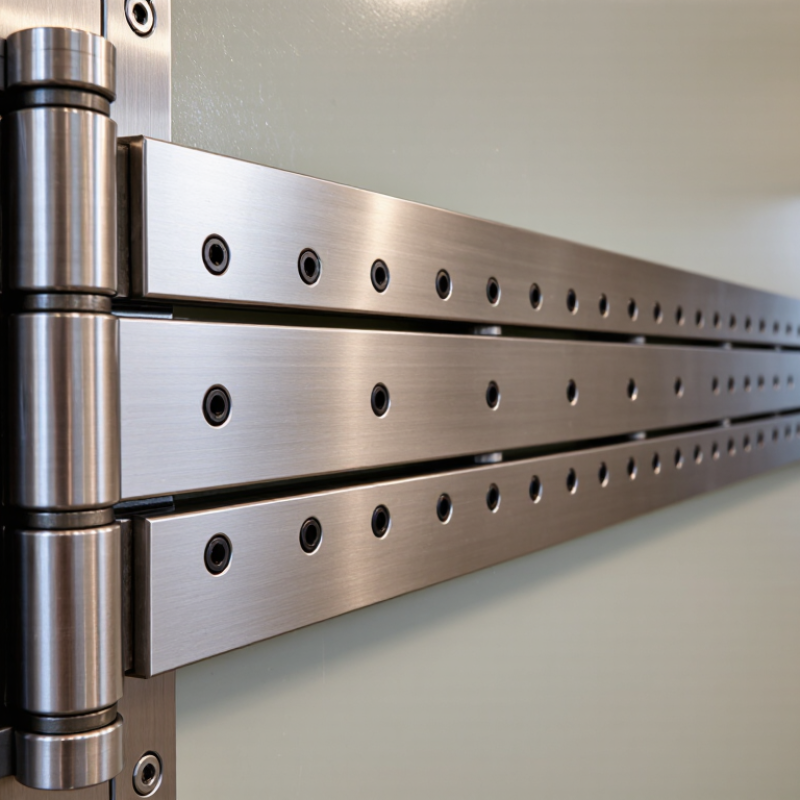
A heavy-duty full-surface continuous hinge is a long hinge running from the door’s top edge to its bottom edge. It distributes weight across the entire frame, rather than concentrating load at three or four separate hinges. This design supports heavy steel, wood, and reinforced composite doors. It also helps reduce hinge-side sag, uneven gaps, and repeated fastener stress.
According to Grand View Research’s 2024 door hardware analysis, the global market is projected to grow steadily through 2030, driven partly by renovation and replacement demand. That growth reflects a practical concern: commercial doors face frequent opening cycles. A continuous hinge can improve alignment after thousands of movements. In field installations, installers should check door weight, frame condition, clearances, and fastener engagement. Small errors matter.
The hinge should match the door’s height, thickness, and operating environment. Stainless steel suits humid corridors and washdown areas. Steel options may offer strong load performance at a lower cost. ANSI/BHMA A156.26 provides performance guidance for continuous hinges, including durability testing and operating cycles. Do not treat every “heavy-duty” label as equal. It is an easy mistake. A reliable supplier should provide load ratings, material details, cycle-test information, and installation instructions. Some doors still require extra reinforcement. This point is often overlooked.
| Feature | Description and Typical Information | Why It Matters |
|---|---|---|
| Definition | A heavy-duty full-surface continuous hinge is a long hinge that runs along most or all of a door’s height. Its two leaves mount on the exposed faces of the door and frame, while the hinge knuckle spans the joint. | The continuous support distributes door load along a longer portion of the door edge than a few separate hinges typically do. |
| Typical applications | Commercial and institutional doors, service doors, equipment enclosures, and other applications where frequent use or added door support is needed. | Suitability depends on the door, frame, traffic, environment, and the hinge manufacturer’s published load and installation guidance. |
| Full-surface mounting | The leaves attach to the door and frame surfaces rather than requiring a mortise for the full hinge leaf. Some models may still require preparation or special fasteners. | Surface mounting can simplify installation or replacement, but accurate alignment and secure fastening remain important. |
| Continuous construction | The hinge extends along the door height and uses interleaved knuckles connected by a pin or other hinge mechanism. Exact construction varies by design. | Longer hinge engagement can help spread forces and support door alignment; it does not eliminate the need for a suitable frame and fasteners. |
| Common materials | Available materials commonly include stainless steel, carbon steel, and aluminum. Stainless steel grades such as 304 and 316 are used where corrosion resistance is required. | Material selection should reflect expected loads, indoor or outdoor exposure, moisture, chemicals, and finish requirements. |
| Corrosion resistance | Resistance depends on the base material, grade, finish, and surrounding environment. A coated steel hinge and a stainless steel hinge may perform differently in the same conditions. | For coastal, washdown, or corrosive environments, verify the specified material and suitability with the supplier rather than relying on appearance alone. |
| Length and width | Hinges are supplied in different lengths and leaf widths to suit door dimensions and mounting conditions. The required size is model-specific; there is no single standard size for every heavy-duty application. | Measure the door and frame, and check the hinge drawing for leaf width, overall length, clearance, and any required trimming instructions. |
| Load capacity | There is no universal load rating for all heavy-duty continuous hinges. Capacity depends on hinge design, material, length, fastener type and spacing, door size, and installation quality. | Use the manufacturer’s tested rating and installation instructions for the exact model. Do not estimate capacity from hinge appearance or material thickness alone. |
| Fasteners | Fastener type, diameter, length, quantity, and spacing vary by hinge and application. Some installations may require through-bolts or reinforcement instead of relying only on surface screws. | Fasteners must be compatible with the door and frame materials and installed according to the hinge instructions to achieve the intended support. |
| Door preparation | Full-surface hinges are often selected to avoid a full-length mortise, but holes, clearances, reinforcement, or other preparation may still be required. | Check the installation drawing before drilling, especially for fire-rated, security, or specialty doors. |
| Selection checklist | Confirm door height, width, weight, thickness, frame material, opening frequency, exposure conditions, required clearances, finish, and applicable project requirements. | Matching the hinge to the complete door assembly helps reduce alignment, wear, and premature-failure risks. |
| Inspection and maintenance | Periodically check fasteners, hinge alignment, smooth movement, wear, and signs of corrosion. Follow the product instructions for lubrication, if lubrication is required. | Routine inspection can identify loose hardware or developing problems before they affect door operation. |
It runs from the door’s top edge to its bottom edge. This spreads the door’s weight along the frame. Less stress gathers at a few hinge points.
It can support heavy steel, wood, or reinforced composite doors. Warehouses, schools, workshops, and service corridors are common settings. Check the door and frame before choosing one.
Stainless steel may suit humid corridors or washdown areas. Coated steel can work in controlled indoor spaces. Ask for material details and corrosion guidance.
Measure the door’s height, thickness, and weight. Check the frame condition and available clearance, too. Small errors matter.
Use a straight, stable mounting surface. Pre-drill holes and choose fasteners suited to both materials. Leave room for seals and thresholds. A trial fit helps.
Common options include custom lengths, hole spacing, reinforced leaves, and thicker pins. Sample approval can reveal fit or swing problems. Drawings alone may not tell the whole story.
Ask about leaf thickness, hole position, finish, and pin movement. Cycle checks and inspection records can also help. A pass result is useful, but corrective-action notes matter.
Clean it regularly and inspect the screws after the first week. Recheck fasteners as door use changes. I might be overthinking it, but small checks can prevent bigger trouble.
A Heavy-Duty Full Surface Continuous Hinge is designed to support large or frequently used doors by distributing weight and stress evenly along the entire door height. Unlike conventional hinges, its continuous structure can improve alignment, reduce sagging, and provide smoother operation. Durable materials such as stainless steel, reinforced steel, or corrosion-resistant aluminum are commonly selected according to load, environment, and appearance requirements. Important structural features may include precision-formed leaves, strong fastener holes, reinforced knuckles, and optional security or fire-rated configurations.
When evaluating a China-based hinge supplier, buyers should review material consistency, production equipment, inspection procedures, load testing, and customization capabilities. A reliable manufacturer should be able to provide accurate dimensions, surface treatments, packaging, and technical support for different door systems. Applications may include commercial entrances, industrial facilities, service doors, cabinets, and high-traffic enclosures. Correct installation requires proper door alignment, suitable fasteners, adequate frame support, and careful adjustment. Clear documentation, responsive communication, stable lead times, and after-sales service are also essential for long-term performance.

 LvXing Hinges