Global buyers need more than a hinge that looks bright in a showroom. An Aluminium Waterproof Hinge must tolerate rain, salt air, temperature changes, and repeated movement. Coastal warehouses, outdoor cabinets, marine equipment, and food-processing areas create very different risks. One hinge cannot suit every application.
The global aluminium market continues to support lightweight, corrosion-resistant hardware demand. Grand View Research identifies transportation, construction, and industrial equipment as major aluminium-use sectors. These sectors increasingly value lower weight and durable surface protection. However, aluminium alone does not guarantee waterproof performance. Seal design, fastener material, machining quality, and installation accuracy matter just as much.
This guide evaluates seven leading Aluminium Waterproof Hinge options for international purchasing teams. The comparison considers alloy selection, anodizing or powder coating, gasket compression, load capacity, opening cycles, and maintenance needs. IEC 60529 provides the recognized framework for IP protection ratings, while ISO 9227 and ASTM B117 support salt-spray corrosion testing. These standards help buyers compare evidence, not marketing language. Ask for test conditions and duration.
Details matter. A poorly aligned hinge can crush its gasket. A stainless-steel screw can still create galvanic corrosion against aluminium. A beautiful finish may weaken after harsh cleaning. That is easy to overlook.
No hinge is universally waterproof. Real performance depends on the complete enclosure, drainage design, and installation environment. Buyers should verify drawings, samples, certificates, and supplier experience before placing volume orders. The best choice balances protection, service life, supply reliability, and total cost—not just the lowest unit price.
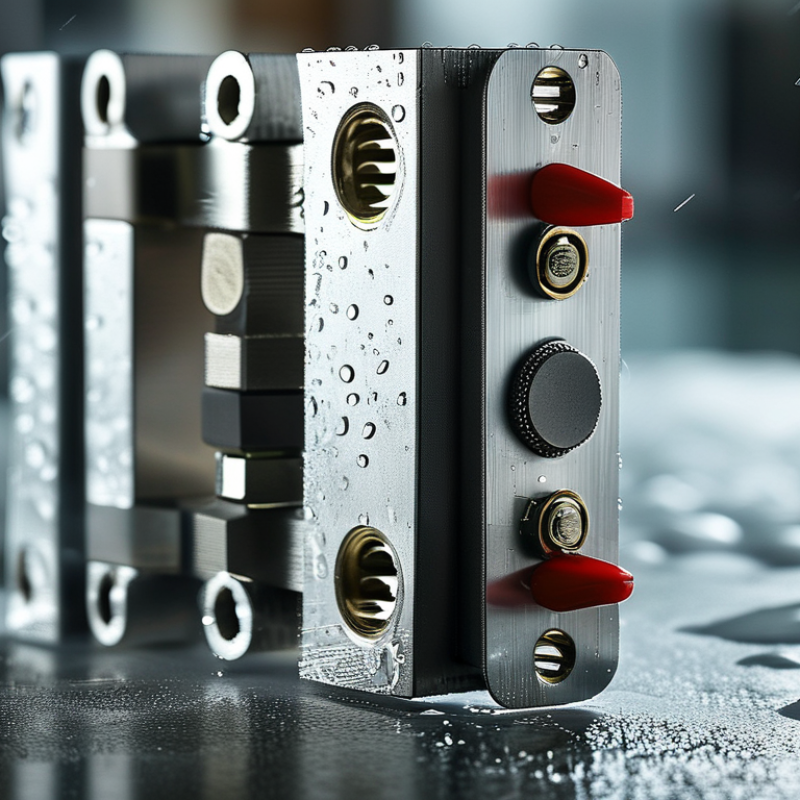
Aluminium waterproof hinges combine a lightweight alloy body with corrosion-resistant pins, sealed bearings, and drainage-friendly geometry. They support panels while reducing rust risk in wet environments. However, “waterproof” is not a universal technical rating. IEC 60529 defines IP protection for enclosures, not automatically for individual hinges. Buyers should request test conditions, sealing details, and cycle-life results.
Aluminium is widely selected because it offers low weight, good strength, and practical corrosion resistance. The U.S. Geological Survey reported approximately 70 million metric tons of global primary aluminium production in 2023. That scale supports broad material availability and stable fabrication options. In practice, hinges may appear on outdoor electrical cabinets, solar equipment, marine access panels, refrigerated units, and washdown areas. Drain holes matter. Trapped water can damage pins, even when the hinge surface looks intact.
For coastal installations, anodizing or suitable powder coating can improve surface protection, but neither replaces correct stainless or coated hardware. A hinge used near salt spray needs a material pairing review. Galvanic corrosion is easy to overlook. Check load capacity, opening angle, temperature range, fastener compatibility, and salt-spray test data. The ISO 9227 test can help compare corrosion resistance, but laboratory hours do not perfectly reproduce every site. Real conditions remain less predictable.
| No. | Aluminium Hinge Type | Typical Construction | Common Size Range | Typical Load Guidance | Waterproof and Corrosion-Resistance Features | Recommended Applications | Best Buyer Profile |
|---|---|---|---|---|---|---|---|
| 1 | Anodized Aluminium Continuous Hinge | 6063 or 6061 aluminium leaves with a stainless-steel or aluminium pin; supplied in long lengths and cut to size. | Length: 300–2,000 mm Leaf width: 25–75 mm Typical thickness: 1.5–3.0 mm |
Suitable for evenly distributed loads on lightweight to medium-duty doors and access panels; the actual capacity depends on hinge length, fastener spacing, and panel stiffness. | Very good for outdoor exposure | Electrical cabinets, equipment enclosures, inspection doors, outdoor control boxes, and service panels. | Industrial buyers needing continuous support, reduced door sag, and easy length customization. |
| 2 | Lift-Off Aluminium Butt Hinge | Die-cast or machined aluminium leaves with a removable stainless-steel pin; usually installed as two or three hinges per door. | Height: 50–150 mm Leaf width: 30–75 mm Typical thickness: 2–5 mm |
Commonly used for lightweight and medium-weight doors; select the quantity and hinge size according to door mass and operating frequency. | Good when combined with a gasketed door design | Removable equipment doors, outdoor cabinets, battery boxes, HVAC panels, and access hatches. | Maintenance-focused buyers who require fast door removal without dismantling the hinge body. |
| 3 | Concealed Aluminium Hinge | Internal aluminium hinge mechanism, often with stainless-steel pins or pivots; the hinge is hidden between the door and frame. | Body length: 40–120 mm Typical opening angle: 90°–120° Adjustment: commonly 2D or 3D, depending on design |
Designed for lightweight to medium-duty enclosure doors; verify the manufacturer’s tested load at the required opening angle. | Good protection from direct rain and tampering | Architectural access panels, premium electrical enclosures, clean-room cabinets, and flush-mounted outdoor doors. | Buyers prioritizing a clean appearance, security, and reduced exposure of hinge components. |
| 4 | Adjustable Friction Aluminium Hinge | Aluminium hinge body with a friction washer, friction screw, or adjustable torque mechanism; may include stainless-steel hardware. | Height: 50–100 mm Typical opening angle: 90°–180° Adjustable holding torque: design-specific |
Best for doors, screens, and covers that must remain open at selected angles; torque must be matched to panel weight and center of gravity. | Good for rain-exposed covers when fasteners and seals are protected | Solar equipment covers, instrument panels, outdoor displays, marine electronics, and access lids. | Buyers needing controlled movement without a separate stay or door prop. |
| 5 | Spring-Loaded Aluminium Hinge | Aluminium hinge leaves with an internal or external stainless-steel spring that provides self-closing force. | Height: 50–100 mm Typical opening angle: 90°–180° Spring force: application-specific |
Suitable for lightweight doors and covers; spring tension should be selected so the door closes reliably without overstressing the frame. | Good for wet areas when the spring and pin are sealed or corrosion-resistant | Outdoor electrical cabinets, safety guards, pool equipment enclosures, utility boxes, and small access gates. | Buyers requiring automatic closing for safety, dust control, or equipment protection. |
| 6 | Heavy-Duty Aluminium Strap Hinge | Wide aluminium strap or plate with reinforced knuckles and stainless-steel pins; commonly paired with multiple through-bolts. | Strap length: 100–300 mm Strap width: 25–75 mm Typical thickness: 3–8 mm |
Appropriate for larger access doors, gates, and covers when the hinge is supported by a rigid frame and correctly spaced fasteners. | Very good with anodized or powder-coated aluminium surfaces | Large service doors, marine lockers, outdoor storage boxes, agricultural equipment, and utility enclosures. | Industrial and infrastructure buyers seeking high rigidity and visible mechanical strength. |
| 7 | Marine-Grade Aluminium Hinge with Stainless Pin | Marine-use aluminium alloy body, commonly anodized or powder coated, with a 316 stainless-steel pin and corrosion-resistant fasteners. | Height: 60–150 mm Leaf width: 40–100 mm Typical thickness: 3–6 mm |
Suitable for medium-duty marine and coastal equipment; galvanic compatibility between aluminium, stainless steel, coatings, and fasteners must be considered. | Excellent for coastal and salt-spray environments when correctly isolated | Boat lockers, dock equipment, coastal electrical cabinets, desalination equipment, and outdoor infrastructure. | Global buyers operating in marine, coastal, humid, or high-salt environments. |
Selection note: An aluminium hinge alone does not make an enclosure waterproof. For reliable water resistance, combine the hinge with a continuous gasket, correctly overlapped door edges, sealed fastener penetrations, suitable drainage, and an enclosure tested to the required IP level under IEC 60529. Final load capacity, opening angle, salt-spray performance, and service life should be confirmed using the supplier’s technical drawings and test data.
: Butt hinges support simple doors and moderate loads. Continuous hinges spread force along the entire door edge. Lift-off hinges allow quick panel removal. Spring hinges close doors automatically. Concealed hinges protect moving parts from direct rain. Strap hinges suit wider or heavier panels. Friction-stay hinges hold covers at selected angles.
Not always. A hinge may resist rain but fail in standing water or salt spray. The gasket, drainage path, enclosure design, and installation angle also matter. Treat “waterproof” as a specification to verify, not a guarantee.
Butt hinges suit simple access doors with predictable movement. Continuous hinges help distribute force across long or heavy panels. Friction-stay hinges work well for ventilation covers. Choose based on panel weight, opening angle, and service access.
Choose one when technicians regularly remove a panel. It can speed inspections and cleaning. Leave enough clearance around the hinge and gasket. A tight installation may make removal difficult.
Request corrosion-resistant aluminium and sealed bushings. Stainless fastening hardware can improve wet-location reliability. Anodizing may improve wear resistance. Powder coating adds another protective layer. Confirm coating thickness and material details in writing.
Yes, especially for large shipments. Ask for corrosion testing, coating data, and batch traceability. Salt-spray testing can support corrosion comparisons. Test a sample through repeated opening cycles. This may feel slow.
Confirm door weight, panel thickness, opening angle, and removal needs. Check the hinge axis and required clearance. Review supplier tolerances and test records. Separate pricing for alloy, machining, coating, hardware, packaging, and freight.
Keep the hinge axis straight. Do not force a misaligned door. Use isolating washers between aluminium and steel in wet locations. Leave drainage clearance beneath the hinge knuckle. Follow the stated fastener torque. Test the complete assembly, not only the hinge.
This guide explains how an Aluminium Waterproof Hinge is designed to resist moisture, corrosion, and repeated movement in demanding environments. It introduces common applications, including marine equipment, outdoor cabinets, industrial enclosures, transport systems, clean facilities, and architectural installations. Readers will learn which features define quality, such as corrosion-resistant construction, accurate alignment, smooth operation, secure fastening, reliable seals, drainage design, and stable performance across changing temperatures.
The article compares seven practical aluminium waterproof hinge types according to structure, installation method, load capacity, sealing performance, adjustability, and durability. It also provides a clear buying framework for global purchasers, covering material selection, testing requirements, applicable standards, supplier evaluation, pricing factors, packaging, lead times, and installation considerations. By balancing performance, lifecycle cost, and application needs, buyers can select a suitable hinge solution for long-term protection and dependable operation.

 LvXing Hinges