Selecting the right Offset Piano Hinge Aluminum manufacturer requires more than comparing catalog prices. Buyers must examine alloy selection, hinge-bar thickness, knuckle alignment, machining tolerance, surface treatment, and load testing. A hinge may look identical in a product photograph. Its performance can differ sharply after repeated opening cycles, vibration, humidity, and uneven installation.
Industry data explains why material discipline matters. The U.S. Geological Survey’s Mineral Commodity Summaries 2025 estimated global primary aluminum production at roughly 73 million metric tons in 2024. The International Aluminium Institute also reports that recycling aluminum uses about 5% of the energy required for primary production. These figures support aluminum’s efficiency, but they do not guarantee a reliable hinge. Poor temper control and thin leaves still create weak points.
As aluminum manufacturing specialist Heidi Brock, president and CEO of the Aluminum Association, has stated, “Aluminum is a material for the future.” That future depends on responsible engineering, not marketing language. The seven manufacturers in this guide are assessed through practical criteria, including alloy traceability, dimensional consistency, corrosion resistance, customization capacity, and documented quality systems. Some suppliers may excel in architectural panels but lack experience with continuous hinges. Others may offer excellent extrusion quality while providing limited fatigue data.
That distinction matters.
A careful shortlist should include factory audits, sample testing, and installation feedback. No ranking can replace those checks. This guide therefore treats Offset Piano Hinge Aluminum as a technical component, not a simple accessory, while recognizing that published specifications sometimes leave important questions unanswered.
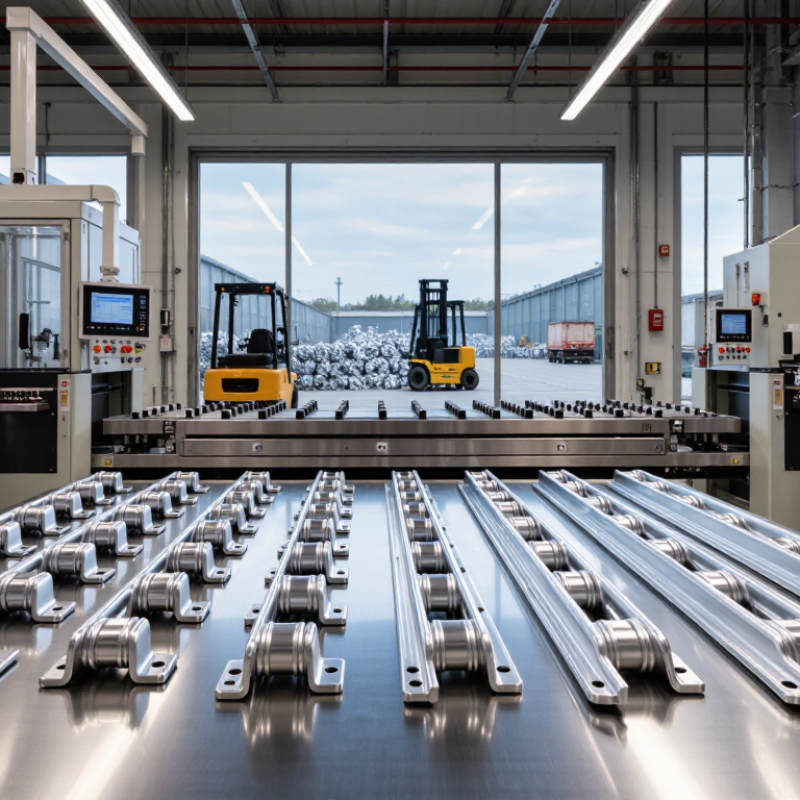
What Is an Offset Piano Hinge and How Does It Work?
What Is an Offset Piano Hinge and How Does It Work?
An offset piano hinge is a continuous hinge with its knuckle positioned away from the mounting leaves. This offset moves the pivot line beyond the panel edge. When a cover opens, it clears the frame instead of scraping against it. The design resembles a narrow metal spine, running almost the full length of a door or lid.
In practical installations, aluminum offset piano hinges help distribute load across many fasteners. That reduces stress around individual screw holes. The hinge usually uses two leaves, a pin, and a rolled barrel. One leaf attaches to the fixed frame; the other supports the moving panel. As the panel rotates, the offset creates extra clearance for seals, overlapping covers, and recessed compartments. Small errors matter. A few millimeters can change the closing force.
Material selection also affects service life. The U.S. Geological Survey’s Mineral Commodity Summaries 2025 estimated global primary aluminum production at about 72 million metric tons in 2024. This scale supports broad access to extruded aluminum components, but material availability does not guarantee hinge quality. Engineers should verify alloy, temper, pin hardness, fastener spacing, and corrosion resistance. The International Aluminium Institute reports that roughly 75% of aluminum ever produced remains in use, highlighting its long-term reuse potential. Still, I would not treat that figure as a hinge-life promise. Cycle testing, load testing, and exposure testing remain necessary. Real assemblies are less tidy than drawings.
Key Criteria for Evaluating Aluminum Hinge Manufacturers
For a 2026 list of the seven best offset piano hinge aluminum manufacturers, evaluation should begin with engineering evidence, not catalog photos. The International Aluminium Institute reported more than 72 million tonnes of primary aluminum production in 2024. That scale makes material traceability essential. Ask for alloy certificates, temper details, and batch records. A dependable manufacturer should also state hinge load ratings, pin diameter, leaf thickness, and machining tolerances. Vague specifications create expensive surprises during installation.
Performance testing deserves equal attention. Look for cycle-test results, corrosion testing, and dimensional inspection records. ASTM B117 salt-spray testing can reveal coating weaknesses, but it does not perfectly predict every outdoor environment. ISO 9001 certification supports process control, yet it cannot replace product-specific evidence. I still question suppliers that show certificates but avoid sharing failure data. Real expertise includes admitting limits.
Tips: Request three samples from different production batches. Measure hole alignment with calipers. Check smooth movement after repeated opening cycles. Confirm packaging protects long hinge lengths from bending. Compare lead times against documented capacity, not promises. The best choice may cost more initially, but inconsistent tolerances can multiply assembly labor. Also review aluminum compatibility with nearby metals, especially in damp conditions. An overlooked washer or fastener can cause galvanic corrosion. 马会
7 Best Offset Piano Hinge Aluminum Manufacturers 2026 - Key Criteria for Evaluating Aluminum Hinge Manufacturers
| Rank |
Anonymous Manufacturer Profile |
Primary Aluminum Alloy |
Typical Leaf Thickness |
Offset Range |
Standard Pin Diameter |
Typical Load Capacity* |
Available Finishes |
Quality & Compliance Evidence |
Typical MOQ |
Typical Lead Time |
Evaluation Score |
| 1 |
Manufacturer Profile A
High-volume architectural hardware specialist |
6063-T5 / 6061-T6 options |
1.5–3.0 mm |
10–40 mm |
3.0–6.0 mm |
80–150 kg/m |
Mill, anodized, powder coated, custom color |
Dimensional inspection reports, material certificates, batch traceability |
500–1,000 m |
20–35 days |
9.2/10 |
| 2 |
Manufacturer Profile B
Custom extrusion and fabrication specialist |
6063-T5 |
1.2–2.5 mm |
8–35 mm |
2.5–5.0 mm |
60–120 kg/m |
Anodized, powder coated, brushed, satin |
First-article inspection, profile drawings, coating thickness checks |
300–800 m |
25–40 days |
9.0/10 |
| 3 |
Manufacturer Profile C
Industrial enclosure hardware producer |
6061-T6 / 6063-T5 |
2.0–4.0 mm |
12–50 mm |
4.0–8.0 mm |
100–200 kg/m |
Mill, clear anodized, hard anodized, powder coated |
Load testing, salt-spray testing by specification, lot identification |
500–1,500 m |
30–45 days |
8.8/10 |
| 4 |
Manufacturer Profile D
Short-run precision hinge manufacturer |
6063-T5 |
1.0–2.0 mm |
6–30 mm |
2.0–5.0 mm |
40–90 kg/m |
Mill, anodized, brushed, black powder coated |
Prototype approval, sampling records, profile tolerance inspection |
100–500 m |
15–30 days |
8.6/10 |
| 5 |
Manufacturer Profile E
Commercial cabinet and access-panel supplier |
6063-T5 |
1.5–2.5 mm |
10–32 mm |
3.0–5.0 mm |
50–110 kg/m |
Mill, clear anodized, silver anodized, powder coated |
Incoming material inspection, assembly checks, packaging inspection |
300–1,000 m |
20–35 days |
8.4/10 |
| 6 |
Manufacturer Profile F
Export-oriented standard hardware producer |
6063-T5 |
1.0–2.5 mm |
8–25 mm |
2.5–4.0 mm |
35–80 kg/m |
Mill, anodized, standard powder-coated colors |
Basic dimensional reports, production samples, carton testing |
500–2,000 m |
25–45 days |
8.1/10 |
| 7 |
Manufacturer Profile G
Value-focused OEM hinge supplier |
6063-T5 |
1.0–2.0 mm |
6–25 mm |
2.0–4.0 mm |
30–70 kg/m |
Mill, anodized, basic powder coating |
Pre-shipment inspection, sample confirmation, quantity verification |
500–2,000 m |
30–50 days |
7.8/10 |
Evaluation methodology: Scores reflect a weighted comparison of material options, offset customization, load capacity, finish consistency, quality documentation, minimum order flexibility, and lead-time performance.
*Load capacity: Typical indicative capacity per metre under properly supported installation conditions. Final capacity must be confirmed through application-specific testing, hinge length, mounting method, door weight, and cycle requirements.
Seven Leading Offset Piano Hinge Aluminum Manufacturers in 2026
Seven Leading Offset Piano Hinge Aluminum Manufacturers in 2026
The seven leading offset piano hinge aluminum manufacturers in 2026 compete through accuracy, corrosion resistance, and dependable production. Their factories typically combine aluminum extrusion, CNC forming, drilling, and controlled riveting. This matters because offset hinges must maintain a consistent knuckle line across long panels. Small alignment errors can cause binding, noise, or uneven door gaps.
The International Aluminium Institute reported global primary aluminum production above 70 million metric tons in 2023. That scale supports wider material access, but it does not guarantee better hinges. Leading manufacturers therefore specify alloy temper, wall thickness, pin diameter, and surface treatment in technical documents. Anodizing remains common for exposed applications, while powder coating adds color and extra protection. Short lead times help.
Industry assessments from Grand View Research continue to show strong demand for aluminum products, supported by lightweight design and recycling advantages. The strongest seven manufacturers respond with custom lengths, punched mounting holes, and batch inspection records. They also test opening cycles, load behavior, and coating adhesion. These details reveal practical experience better than polished catalog claims.
A careful buyer should still question broad “premium quality” language. Some published rankings rely on sales estimates, not hinge-specific data. That weakness deserves attention. Compare tolerances, sample reports, delivery history, and after-sales engineering support before choosing a supplier. The best manufacturer is not always the largest; it is the one that repeats the same fit, finish, and performance in every shipment.
Manufacturer Comparison by Materials, Design, Quality, and Service
The 7 best offset piano hinge aluminum manufacturers in 2026 should be compared beyond catalog photographs. Materials reveal practical differences. Look for 6063 aluminum when smooth forming and clean anodizing matter. Choose 6061 aluminum where higher strength supports heavier panels. A stainless-steel pin can improve wear resistance, especially on frequently opened covers. Ask for alloy data, surface-treatment details, and corrosion-test records. Attractive metal is not enough.
Design quality depends on geometry. A true offset hinge should provide the required clearance without creating excessive panel movement. Check knuckle alignment, leaf thickness, pin diameter, mounting-hole spacing, and cut-length accuracy. Small errors become visible along a long hinge. Request a production sample. Measure it yourself. I have seen polished finishes hide uneven knuckles and rough pin rotation. That mistake is easy to make.
Reliable manufacturers also explain their quality process. Compare dimensional inspection, batch traceability, load testing, and packaging protection. Anodizing should remain consistent around drilled holes and cut edges. Service matters when drawings change. Evaluate engineering response time, prototype support, minimum order quantities, and replacement handling. Clear technical replies are stronger evidence than broad promises. Delivery records should be checked against actual schedules, not optimistic estimates. One weakness remains common: some suppliers provide excellent samples but inconsistent mass production. A factory audit or independent inspection can expose that gap. Manufacturers that document corrective actions usually deserve closer consideration.
How to Choose the Right Manufacturer for Your Application
Choosing an offset piano hinge aluminum manufacturer requires more than comparing unit prices. Start with the hinge’s working environment. Confirm the aluminum alloy, temper, leaf thickness, pin diameter, and offset distance. ASTM B221 can help verify extruded aluminum requirements, while ISO 9001 certification shows process control, not guaranteed product performance. Ask for inspection records, material certificates, and dimensional reports from actual production batches.
The International Aluminium Institute reported global primary aluminum production of roughly 72 million metric tons in 2024. This scale supports broad material availability, but quality still varies between suppliers. The U.S. Geological Survey also identifies recycled aluminum as an important supply source. Ask whether recycled content affects strength, surface finish, or corrosion resistance. A capable manufacturer should explain these trade-offs clearly. If the answer sounds vague, keep reviewing options.
Tips: Request samples with your real panel thickness and mounting method. Test them through repeated opening cycles. Check for pin migration, leaf distortion, burrs, and binding under load. For outdoor use, require salt-spray or equivalent corrosion data. For clean interiors, inspect anodizing consistency under bright light. Supplier audits are useful, but they cannot replace your own testing. I have seen hinges pass visual inspection yet fail after slight misalignment. That weakness is easy to miss. Choose a manufacturer that supports engineering changes, traceability, and small pilot orders before full production.
Conclusion
This guide explores the essential features, applications, and working principles of an Offset Piano Hinge Aluminum, including how its offset structure supports smooth movement, balanced load distribution, and improved clearance between connected panels. It also explains the main factors for evaluating manufacturers, such as aluminum grade, dimensional accuracy, hinge design, corrosion resistance, surface treatment, load capacity, production consistency, customization options, and after-sales service.
The article presents seven leading manufacturer types to consider in 2026 without focusing on specific brand names. It compares their materials, engineering capabilities, quality-control systems, design flexibility, lead times, and customer support. Finally, it offers practical advice for selecting the right supplier based on application requirements, operating environment, panel size, installation method, expected usage frequency, budget, and required certifications. This overview helps buyers make a clear, informed decision when sourcing reliable aluminum offset piano hinges for industrial, commercial, enclosure, cabinet, and equipment applications.

 LvXing Hinges